
Blog
Drive Shaft Composition and Structural Features
The drive shaft is a key component in a vehicle’s drivetrain system, responsible for transmitting power from the engine to the wheels, allowing the vehicle to move. Below is an overview of the composition and structural features of a drive shaft: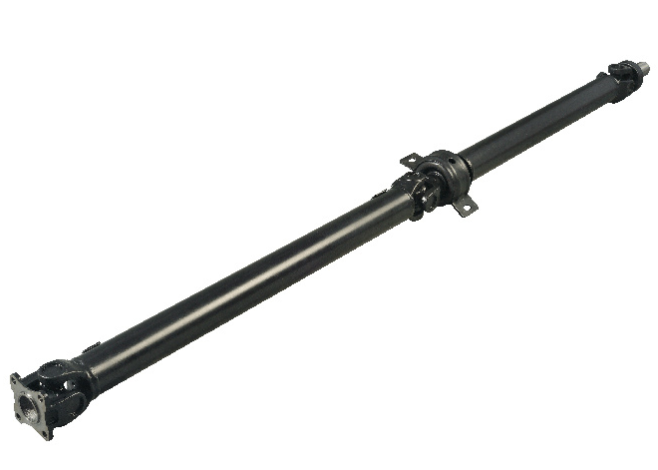
Composition of the Drive Shaft
-
Axle Tube, Telescopic Sleeve, and Universal Joint: The drive shaft consists of an axle tube, a telescopic sleeve, and a universal joint. The axle tube transmits torque, the telescopic sleeve adjusts the length between the drive shafts, and the universal joint ensures a constant speed transmission. While accommodating angular changes between the output shaft and the input shaft.
-
Dynamic Balance: Given that the drive shaft operates at high speeds, dynamic balance is crucial for smooth operation. Before leaving the factory, drive shafts typically undergo dynamic balancing tests and are adjusted on a balancing machine to ensure smooth functioning.
Structural Features of the Drive Shaft
Design for Heavy-Duty Vehicles:
Depending on the vehicle type (e.g., 4×2, 6×4, 6×6), different drive shaft configurations are used. For example, a 4×2 vehicle typically has a single main drive shaft, while a 6×4 vehicle includes a main drive shaft, a middle drive shaft, and a rear axle drive shaft. In a 6×6 vehicle, there are additional front axle drive shafts. Long axle vehicles often feature a mid-support bearing to reduce shaft bending, which includes a bearing bracket and rubber bearing.
Universal Joint and Cross Bearings:
The universal joint and cross bearings ensure that power is transmitted even when the angle between components changes. Heavy-duty vehicles use roller bearings, which are better suited to transmit higher torques. The cross-shaped shaft is robust, allowing it to handle larger torque loads.
Spline Sleeve and Nylon Coating:
The spline sleeve and axle tube are typically welded together to form a single unit. The spline shaft and flange fork are also welded, and the spline’s pressure angle is designed to increase strength and prevent deformation under high torque. The spline shaft and tube surfaces are coated with a nylon material, which not only increases wear resistance and provides self-lubrication but also reduces the impact of shock loads, improving the shaft’s cushioning capacity.
Sealed Protective Covering:
To protect the drive shaft from external elements such as dust, dirt, and moisture. It is typically equipped with a sealed protective tube. Two polyurethane rubber seals are arranged within the protective cover, ensuring the drive shaft remains sealed and preventing foreign contaminants from damaging the spline shaft. In addition, grease is applied to the spline shaft during assembly to minimize the need for lubrication during operation, reducing maintenance requirements.
High-Speed Rotation and the Importance of Dynamic Balance:
Since the drive shaft rotates at high speeds with relatively few supports, its dynamic balance is vital. Most drive shafts undergo dynamic balancing tests during production to ensure that the shaft operates smoothly at high speeds. Which is crucial for vehicle performance and safety.
Conclusion
Drive shafts are designed to be strong, wear-resistant, and capable of withstanding high torque loads, especially in heavy-duty vehicles. The design involves not only the use of durable materials. But also precision in balancing to ensure the smooth transfer of power. With components like the universal joint, cross bearings, spline shaft, and protective seals. The drive shaft effectively adapts to various operational conditions, providing reliable performance over time.